Collection: John Bauer (1882–1918)

Why John Bauer still draws people in

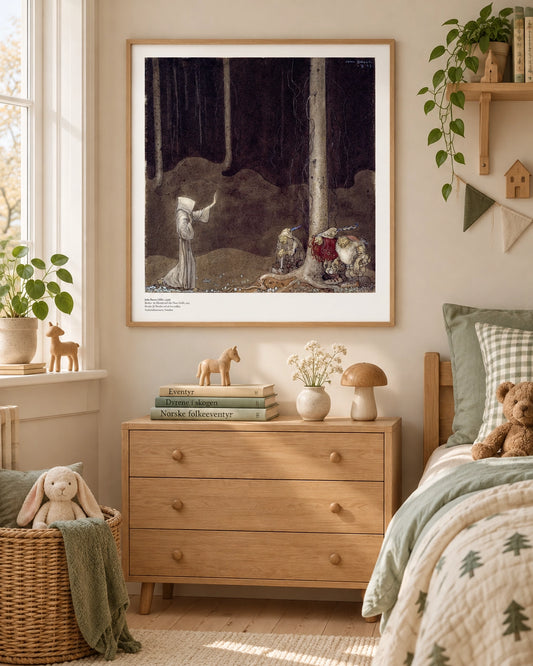
Bauer’s art feels like Scandinavian nature turned into story. His forests are not “backgrounds” — they are living spaces filled with moss, mushrooms, and shadowed light. That’s part of why his work is so loved as Nordic wall art: it brings mood, silence, and imagination into a room without needing loud colour.

He trained at the Royal Swedish Academy of Arts in Stockholm, but his lasting legacy is the visual world he created for folklore: trolls that can be gentle or unsettling, princesses that feel thoughtful rather than decorative, and a nature that looks real even when the creatures aren’t. 


John Bauer in brief (life and work)


  • 1882: Born in Jönköping, Sweden. 
  • Studied at the Royal Swedish Academy of Arts (Stockholm). 
  • Became famous for early editions of Bland tomtar och troll (Among Gnomes and Trolls). 
  • Worked with both illustration and painting, often mixing myth, landscape, and character-driven storytelling. 
  • 1918: Died at age 36 in a shipwreck on Lake Vättern, together with his wife (the artist Ester Ellqvist) and their young son. 


Quote

“Although [Bauer] only mumbled about and never said clearly, he believed that all the creatures he drew actually existed.”

Source: Ove Eklund (friend of John Bauer), quoted in the biography summary on Wikipedia (referring to a 1953 article). 


What to notice in a John Bauer artwork

The forest as character

Look for the way trees, rocks, and undergrowth shape the story’s emotion — safety, mystery, or quiet awe. 

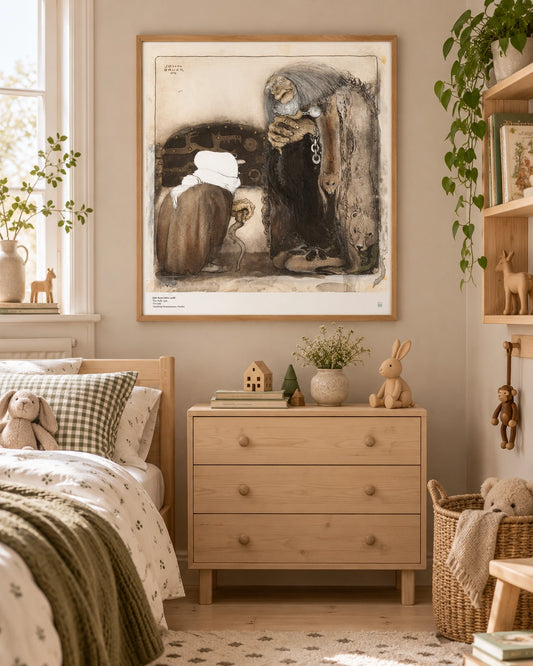
Trolls with personality

Bauer’s trolls are rarely “monsters only.” They can look tired, curious, proud, or oddly kind — which makes them feel real. 

Humpe i Skogen (1913)

  • English title commonly used: Humpe in the Woods
  • (Often connected to Bauer’s fairy-tale illustration world and published context around Bland tomtar och troll.

Poor Little Basse! (1912)

  • Swedish title: Stackars lilla Basse!

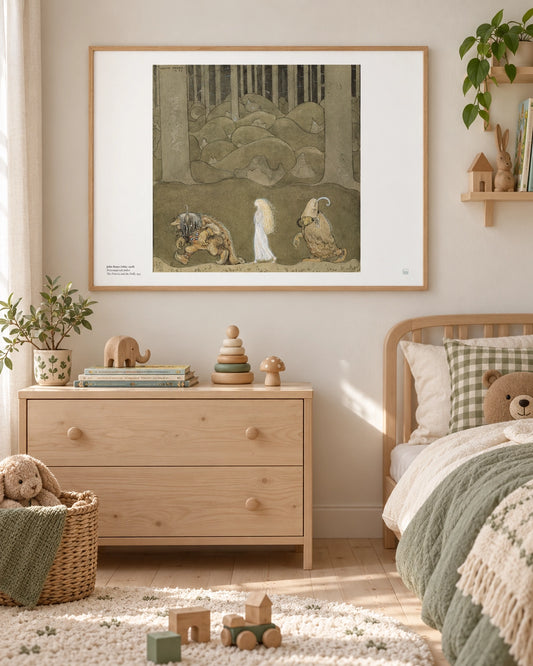
The Princess and the Trolls (1913)

  • Swedish title: Prinsessan och trollen (En kväll vid midsommartid gingo de med Bianca Maria djupt in i skogen)


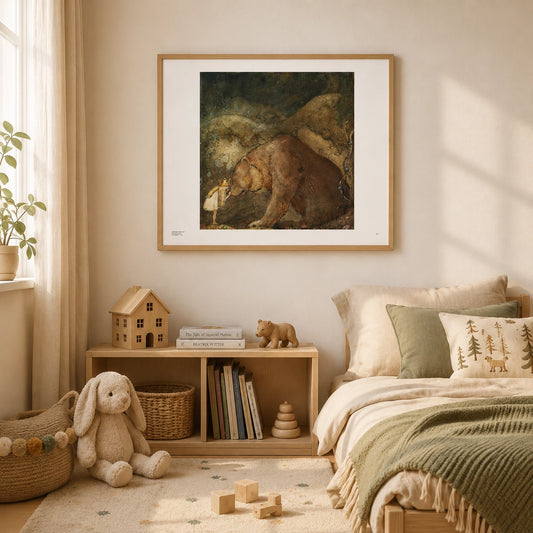
Fairy-tale minimalism

Many scenes use large dark spaces and simple shapes so your eye lands on one key moment: a gaze, a pause, a meeting in the woods.

FAQ

Are these printed locally?

Yes—on demand and near you in 20+ countries, reducing waste and CO₂.

What paper do you use?

Matte, museum-grade paper (200 gsm, ~10.3 mil), FSC-certified or equivalent for a refined, non-reflective finish.

Are these original artworks?

We curate Scandinavian masterpieces and prepare them for high-fidelity printing with careful restoration.

Do you offer multiple sizes?

Yes—our Denmark posters are available in several popular sizes. See each product page for options.