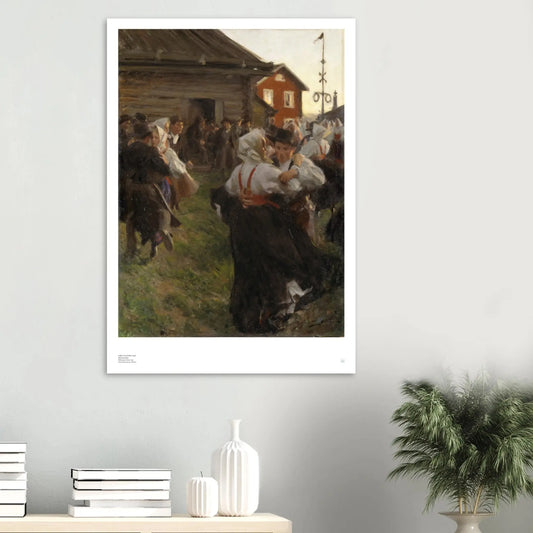
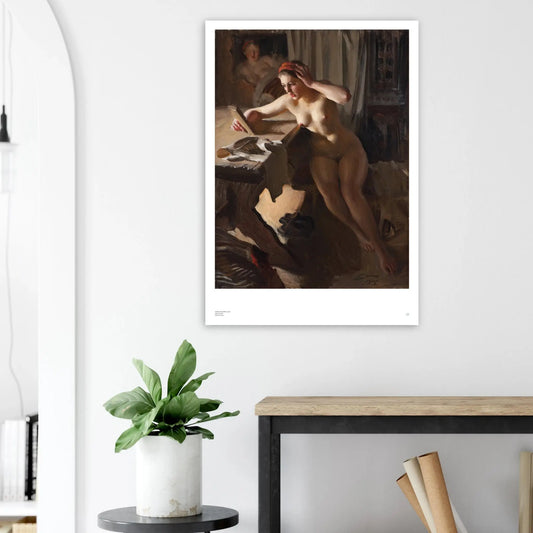
Zorn is one of those artists who can make paint feel like real air. In a single art print you often get three things at once: movement, light, and a strong sense of place. His work moves between society portraits (painted for wealthy patrons in Europe and the USA) and deeply Swedish motifs from Dalarna. Dances, shorelines, and everyday summer life.
That range is part of his reputation. Nationalmuseum points to the late 19th-century period, when Anders and Emma Zorn settled in Mora, as a time when his paintings became a homage to nature and Swedish folk traditions. Often with the long, pale “Nordic night” light that people associate with Scandinavia.
Anders Zorn in brief (life and work)
-
1860: Born in Utmeland, Mora (Dalarna), Sweden.
- Studied at the Royal Swedish Academy of Arts in Stockholm.
- Built an international career, working across Europe and in the United States, where he painted prominent portrait commissions (including American presidents).
- Mastered multiple media: oil, watercolour, etching, and sculpture.
- Returned repeatedly to Mora / Dalarna, painting Swedish summer life, water scenes, and folk culture that became central to his legacy.
-
1920: Died in Stockholm, Sweden.
Quote (credited museum source)
“Midsummer Dance … is a true declaration of love for the Dalarna countryside and the light summer nights.”
Source: Nationalmuseum, “Anders Zorn – Sweden’s Master Painter.”
What to notice in a Zorn painting
The brushwork
He can suggest form with very few strokes—especially in water, fabric, and skin tones—so the painting feels alive rather than overworked.
Swedish summer light
Many of the most recognisable motifs come from Dalarna: bright nights, pale skies, and outdoor social life.
A wide technical range
Zorn isn’t just “a painter.” He is also celebrated for etching and for moving confidently between media and subjects.
The Legacy of Anders Zorn's Midsummer Paintings
Anders Zorn midsummer paintings art prints capture the essence of Swedish culture during the festive Midsummer celebration. Zorn, a renowned Swedish artist from 1860 to 1920, beautifully depicted the glowing summer nights and traditional customs in his work. His mastery of light, color, and texture brings life to each scene, allowing viewers to experience the joyous spirit of these festivities. Collectors and art enthusiasts highly prize these prints, which celebrate both artistic brilliance and cultural heritage.
Artistic Techniques Behind Zorn’s Midsummer Scenes
Anders Zorn midsummer paintings art prints showcase the artist’s exceptional skill with oils and watercolors. His delicate brushstrokes and unique use of warm, natural hues evoke the soft glow of the Swedish summer sun. These prints reproduce Zorn’s ability to balance realism with impressionistic elements, creating lively and atmospheric scenes. The finely detailed figures, nature, and traditional costumes in these prints make them timeless favorites for anyone interested in art or Scandinavian traditions.
Why Collectors Value Anders Zorn Midsummer Art Prints
Collectors seek Anders Zorn midsummer paintings art prints for their rich cultural storytelling and artistic quality. These prints allow enthusiasts to bring the charm of Sweden’s midsummer celebrations into their homes. Whether displayed in a living room or a gallery, these art pieces spark conversations about tradition and nature. Additionally, the prints are available in various formats and sizes, making them accessible to both casual admirers and serious collectors looking to own a piece of Zorn’s legacy.
The Legacy of Anders Zorn's Midsummer Paintings
Anders Zorn midsummer paintings art prints capture the essence of Swedish culture during the festive Midsummer celebration. Zorn, a renowned Swedish artist from 1860 to 1920, beautifully depicted the glowing summer nights and traditional customs in his work. His mastery of light, color, and texture brings life to each scene, allowing viewers to experience the joyous spirit of these festivities. Collectors and art enthusiasts highly prize these prints, which celebrate both artistic brilliance and cultural heritage.
Artistic Techniques Behind Zorn’s Midsummer Scenes
Anders Zorn midsummer paintings art prints showcase the artist’s exceptional skill with oils and watercolors. His delicate brushstrokes and unique use of warm, natural hues evoke the soft glow of the Swedish summer sun. These prints reproduce Zorn’s ability to balance realism with impressionistic elements, creating lively and atmospheric scenes. The finely detailed figures, nature, and traditional costumes in these prints make them timeless favorites for anyone interested in art or Scandinavian traditions.
Why Collectors Value Anders Zorn Midsummer Art Prints
Collectors seek Anders Zorn midsummer paintings art prints for their rich cultural storytelling and artistic quality. These prints allow enthusiasts to bring the charm of Sweden’s midsummer celebrations into their homes. Whether displayed in a living room or a gallery, these art pieces spark conversations about tradition and nature. Additionally, the prints are available in various formats and sizes, making them accessible to both casual admirers and serious collectors looking to own a piece of Zorn’s legacy.