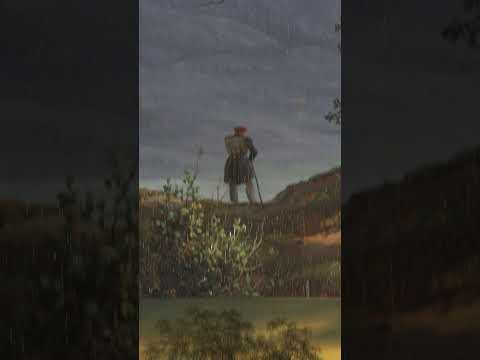
Collection: Thomas Fearnley (1802–1842)

Why Thomas Fearnley still draws people in

Fearnley’s landscapes don’t just show mountains and valleys—they show how it felt to stand there. He worked from direct observation, building compositions from travel sketches and studies, then shaping them into powerful finished paintings.

The National Museum of Norway describes how his large works “bring us closer to nature as he experienced it,” and his career is often remembered for being unusually international for a Norwegian artist of his time—so much so that he was nicknamed “the European” of the Norwegian art world.

If you’re browsing Scandinavian wall art and want landscapes with Nordic clarity (not sweetness), Fearnley is a strong choice: dramatic terrain, careful light, and a quiet seriousness that still feels modern.


Featured highlight: The Grindelwald Glacier (1838)

One of Fearnley’s most famous works, The Grindelwald Glacier, is built from on-site observations and studies. The museum notes how he amplified the landscape compared with the original sketch—steeper slopes, stronger light–shadow contrast, and lush foreground vegetation set against “everlasting” ice and snow.


Thomas Fearnley in brief (life and work)

  • 1802: Born in Halden (then Fredrikshald), Norway.
  • Sent to Christiania (Oslo) as a child; began drawing training early.
  • Studied in Copenhagen, then Stockholm, and received prestigious commissions from the Swedish royal family.
  • Met J.C. Dahl in western Norway; the encounter pushed his studies toward freer, more realistic nature observation.
  • Travelled extensively across Europe; became known as “the European” in Norwegian art circles.
  • Developed major motifs including the Upper Grindelwald Glacier, later turned into his landmark paintings.
  • 1842: Died in Munich, Germany, aged 39 (typhoid fever).

Quote (copy-ready, with source)

“For here he presented his own self, as he was and as he felt the presence of nature, when it was upon him.”

Source: J.C. Dahl, quoted on the National Museum of Norway artist page for Thomas Fearnley (referring to a 1903 text by Andreas Aubert). 


What to notice in a Fearnley painting

Painted from nature
Look for the “on-the-spot” energy: the sense that he learned the landscape by being in front of it.

Light and shadow as structure
Especially in alpine scenes, he builds form through contrast—bright air and deep shadow rather than heavy outlines.

A Romantic, but grounded mood
Even when nature becomes monumental, it’s anchored in observation and specific detail.

FAQ

Are these printed locally?

Yes—on demand and near you in 20+ countries, reducing waste and CO₂.

What paper do you use?

Matte, museum-grade paper (200 gsm, ~10.3 mil), FSC-certified or equivalent for a refined, non-reflective finish.

Are these original artworks?

We curate Scandinavian masterpieces and prepare them for high-fidelity printing with careful restoration.

Do you offer multiple sizes?

Yes—our Denmark posters are available in several popular sizes. See each product page for options.